Case Study / Desalination / Wastewater
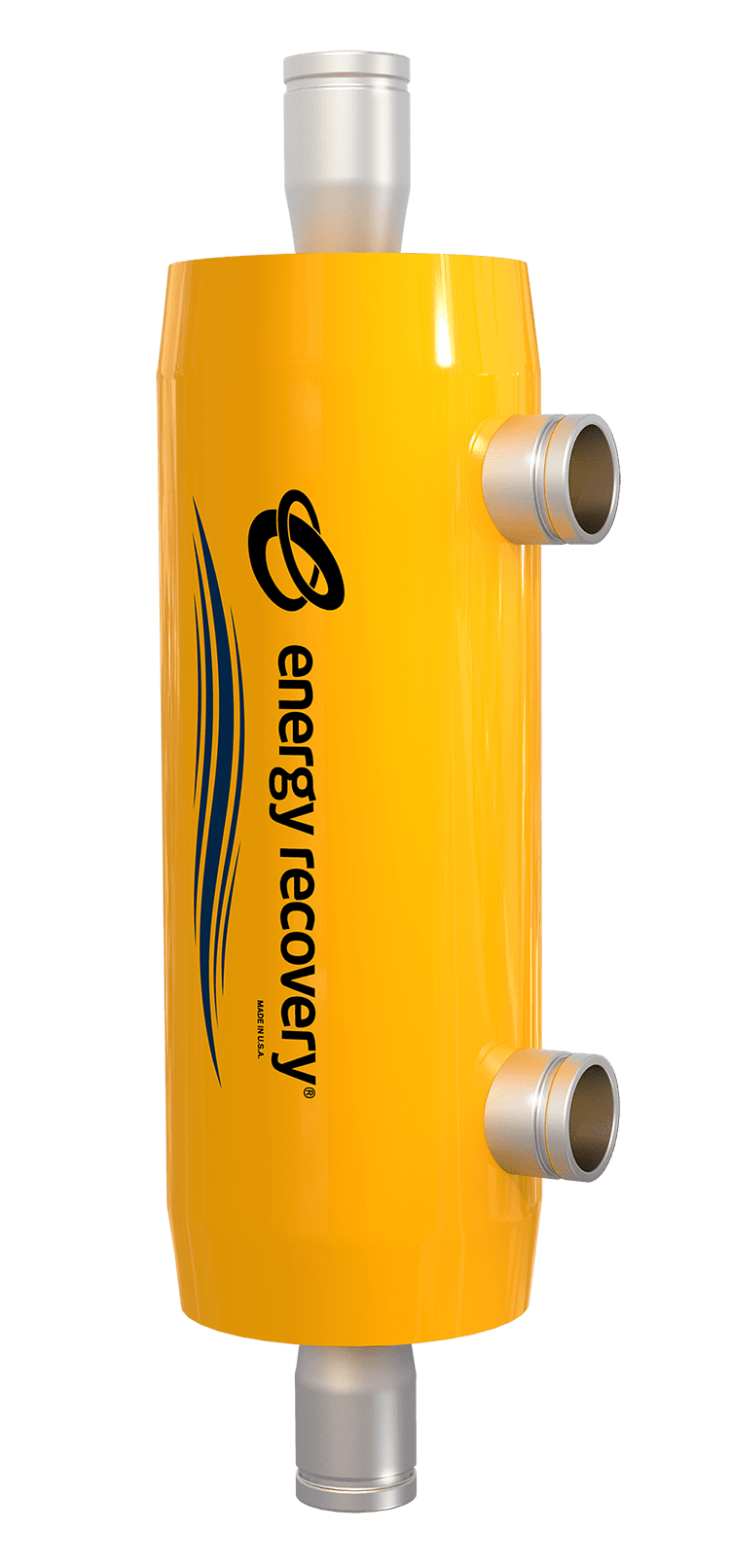
Ideal for brackish water reverse osmosis and water reuse in municipal and industrial applications, our low-pressure PX solutions offer substantial energy savings and ease of integration.
Energy Recovery’s low-pressure PX® Pressure Exchanger® can drive operational efficiency in clean water production for low-pressure systems, providing a sustainable path to saving operational energy. By reducing the energy consumption of low-pressure reverse osmosis, our PX solutions reduce the emissions associated with industrial and municipal reuse, enabling a circular water economy and preventing harmful discharge into the environment. The low-pressure PX is designed for brackish water reverse osmosis (BWRO) and wastewater reuse applications, operating at low pressures from 5.5-31 bar (80-450 psi) and is ideal for use in small and large municipal and industrial plants, making the production and recycling of water financially and environmentally sustainable.

99.8%
Industry-leading uptime and reliability
30 Years
Designed to last with no scheduled maintenance
80-450 PSI
Pressure range
95%
Peak efficiency
The PX Pressure Exchanger transfers hydraulic energy from the concentrated brine stream and uses it to supplement the flow from the main high-pressure feed pump, which feeds the membranes. This is done via direct contact between the concentrated brine and filtered seawater feed stream. An optional booster pump can be used to balance the fluxes in both stages.
Industry-leading reliability and no scheduled maintenance
Modular and scalable isobaric device with wide operating range
Short payback period
Potential to use in existing feed and booster pumps
Lower the energy consumption of wastewater treatment for reduced greenhouse gas emissions
By incorporating the Low-Pressure PX into a low-pressure reverse osmosis (LPRO) system, you can reduce specific energy consumption (SEC) by up to 30% versus a system without energy recovery. The PX recovers pressure energy from the final-stage brine and transfers it directly to the incoming feed, reducing the work required from the high-pressure pump. The result is lower operating cost per cubic meter and a more sustainable reuse or brackish-water RO process.
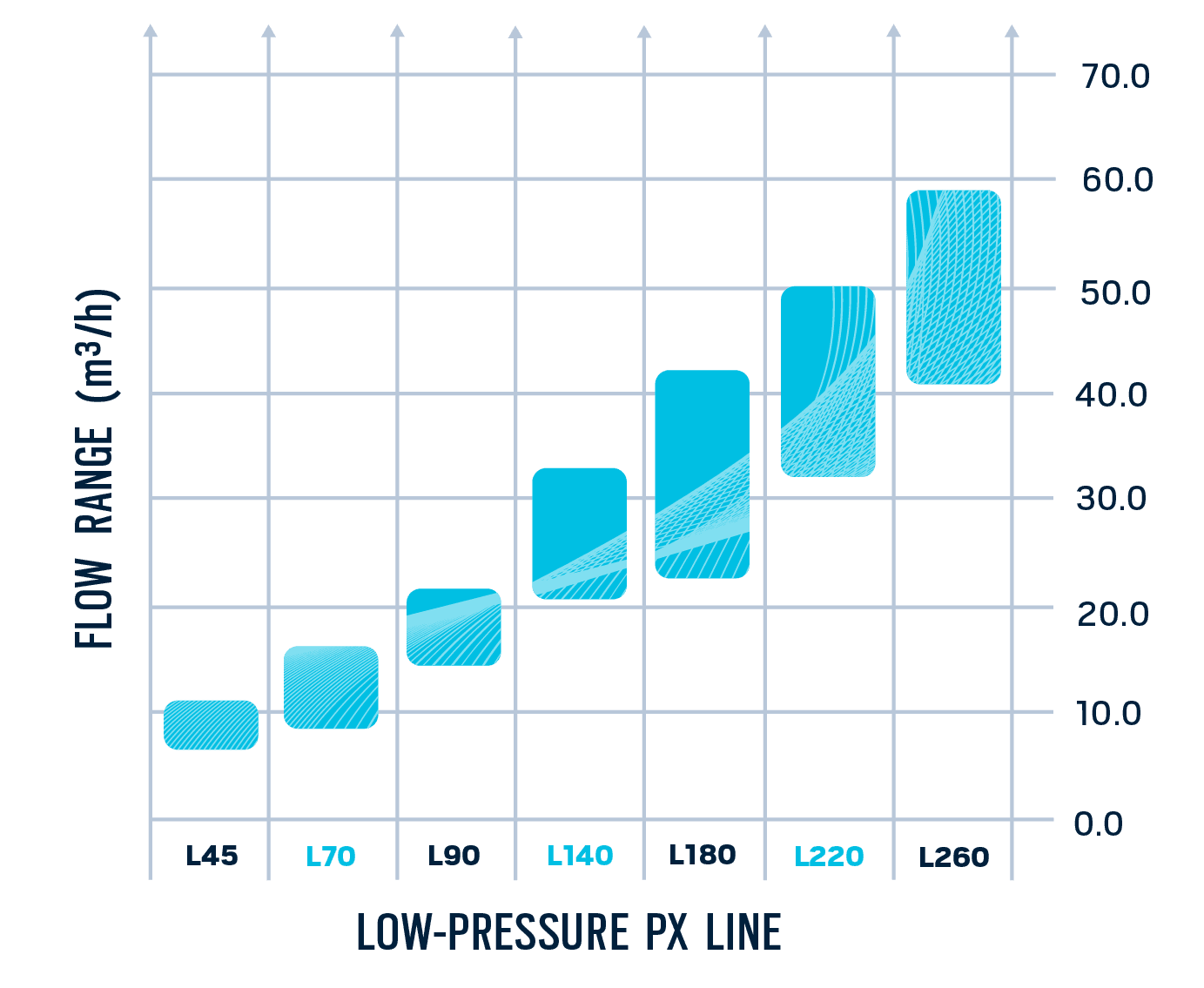
The Low-Pressure PX is built with corrosion-resistant ceramic components and a simple design with only one moving part, delivering industry-leading uptime (~99.8%) and a design life of about 30 years, with no scheduled maintenance. It maintains high efficiency across a wide operating window (5.5–31 bar / ~80–450 psi) and flow capacities (≈7–59 m³/h or 30–260 gpm). Its modular, scalable format supports both retrofits and new builds, helping operators minimize downtime, simplify spares, and reduce total cost of ownership.
The Low-Pressure PX integrates easily into new or existing plants because it’s an isobaric device installed on the final-stage brine line. It transfers that brine pressure directly to the incoming feed, which can reduce the required high-pressure pump size or allow reuse of existing pumps in retrofits. For OEMs and operators, this typically means a smaller energy-recovery footprint, fewer equipment changes, lower CAPEX, and a faster retrofit with less installation risk.
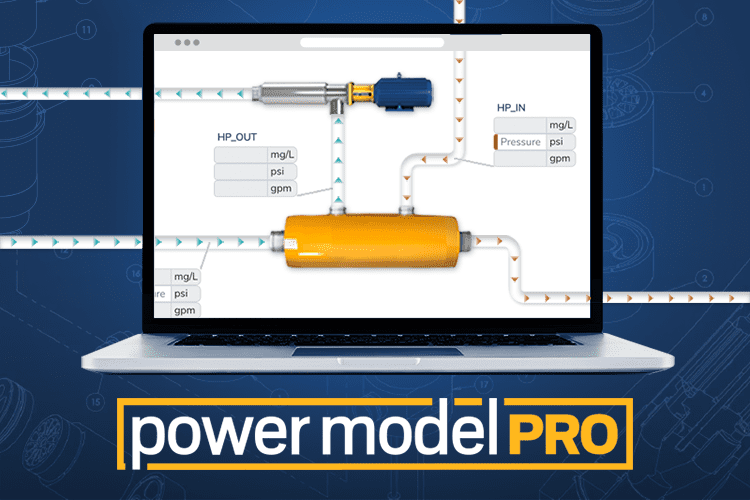
Power Model Pro is a secure, easy-to-use cloud-based product configurator tool that allows you to optimize the hydraulic pumping system of a reverse osmosis system using our products.
Case Study / Desalination / Wastewater

Brochure / Desalination / Wastewater
Brochure / Desalination / Wastewater
Building a more sustainable future where energy efficiency drives operational profitability.