The Challenge
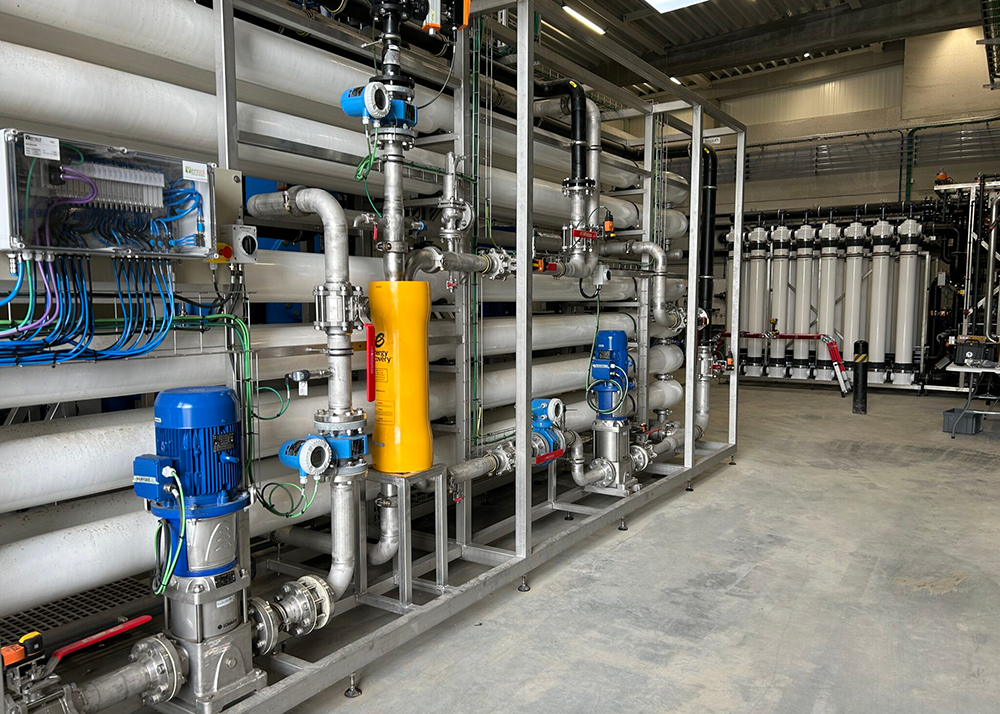
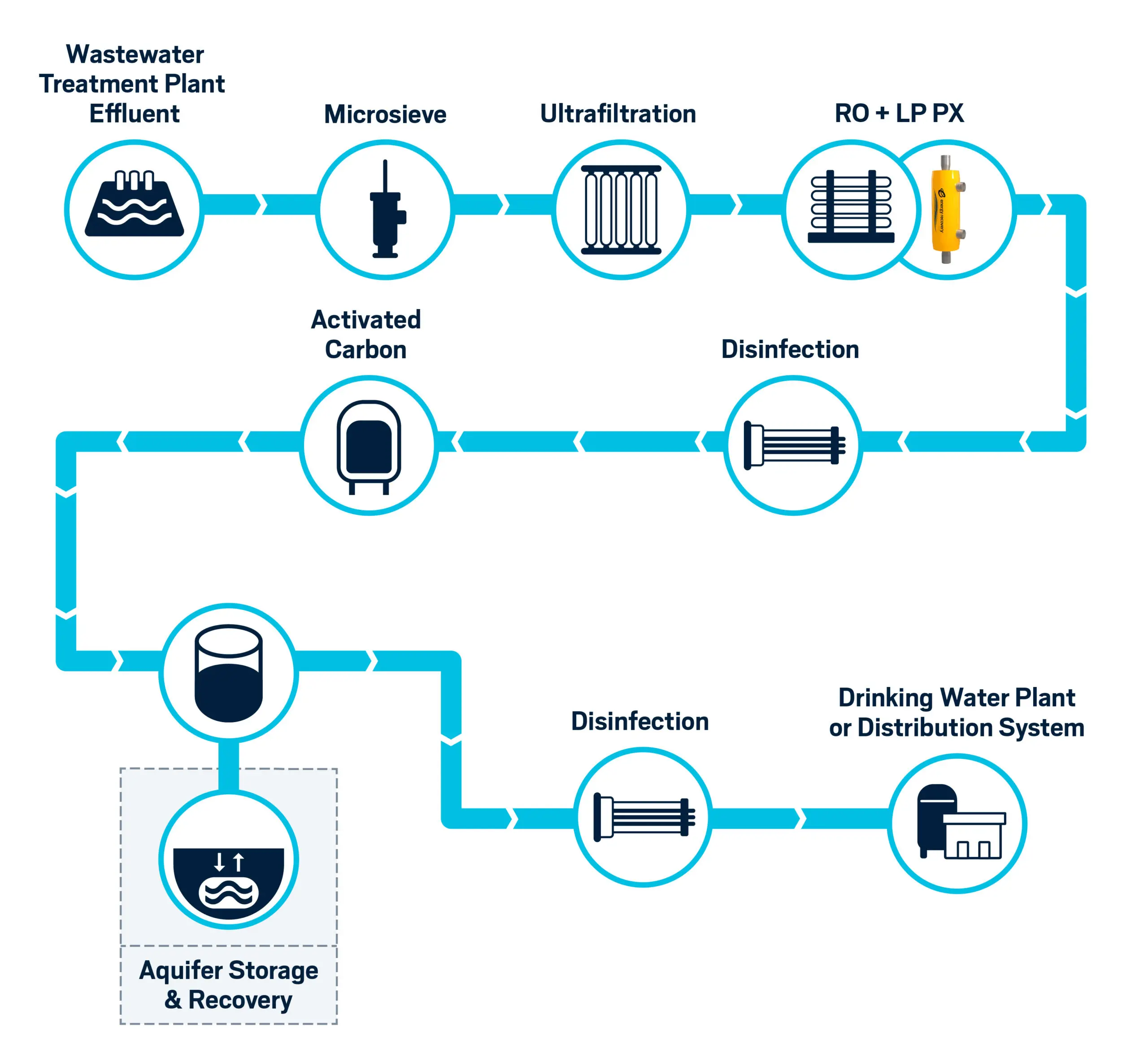
In the heart of Flanders, Belgium, a groundbreaking water reuse initiative is reshaping the future of drinking water. Faced with growing water scarcity due to climate change, the new Water Production Center (WPC) Hofstade (City of Aalst) has emerged as a beacon of resilience and innovation. This visionary plant pioneers one of Europe’s first direct potable reuse (DPR) systems, reusing the effluent of the municipal wastewater treatment plant (WWTP) in Aalst. The project looks to also integrate aquifer storage and recovery (ASR) as a form of seasonal water buffering, storing water during wet periods and supplying it during dry ones, effectively acting as a water battery that scales with shifting demand. All of this is made possible through advanced reverse osmosis (RO) and energy recovery technology.
A Region Under Pressure: Water Scarcity and the Search for Solutions
Flanders is experiencing increasingly frequent droughts and depleted water sources. In response, the Flemish Government launched the Blue Deal, a sweeping initiative to combat water scarcity through water reuse and diversification. The new WPC Hofstade, led by Waterunie (a joint venture of Farys and De Watergroep), in collaboration with Belgian water specialist and OEM Nuoro, along with Aquafin and research platform CAPTURE, was tasked with developing a reuse plant that could safely provide drinking water from treated effluent.
Throughout the design of the DPR plant, attention was given to minimizing its environmental impact, by reducing the chemical consumption and operating the system as energy-efficient as possible. For example, the high operation pressures associated with RO systems posed a challenge.
Location
Flanders, Belgium
Project
Water Production Center Hofstade
System Capacity
53.9 m³/h
System Efficiency with PX
~95%
Energy Savings
~23%
The Solution
PX® Pressure Exchanger® Technology Powers Efficient, Scalable Reuse
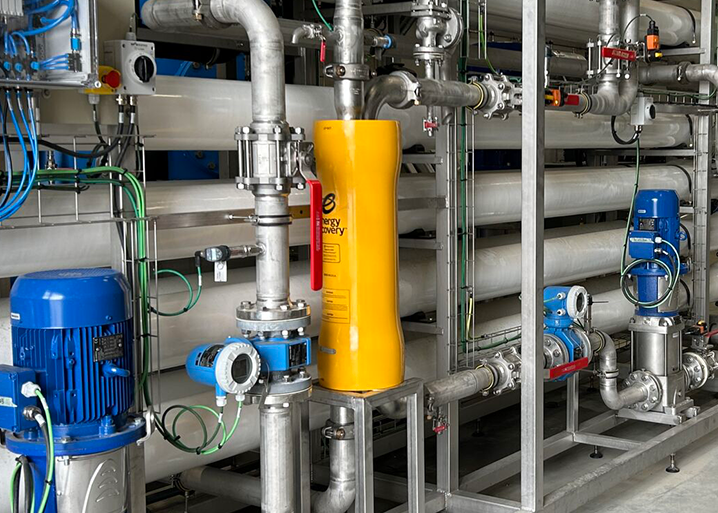
To meet the energy and cost demands of high-efficiency water reuse, the Belgian water specialist Nuoro integrated the Low-Pressure PX (LP PX) from Energy Recovery into a single-train, two-stage brackish water RO (BWRO) system. Operating at 6.7 to 13.9 bar (100–200 psi) with 75% recovery, the system produces 53.9 m³/h (about 342,500 gallons per day) of fresh water, contributing to 400 million liters annually, which is enough to supply potable water for approximately 12,000 people each year.
Supporting a multi-barrier treatment train, based on membrane filtration using Ultrafiltration and RO, with the additional safety barriers of activated carbon and extra disinfection with ultraviolet and free chlorine, the PX captures pressure energy from the brine stream and recycles it back into the system. This reduces energy use by ~23%, enables lower operating pressures, and delivers a payback period of around 3 years. PX technology makes high-efficiency RO practical and cost-effective, helping scale reuse in a sustainable way.
A Dual-Phase Strategy: From Direct Potable Reuse to Climate-Resilient Water Battery
WPC Hofstade’s two-phase reuse strategy is central to its impact. In phase one, the plant launched direct potable reuse (DPR) blending purified water directly into the municipal drinking supply. As one of the first DPR systems in Europe on municipal WWTP effluent, it showcases how multi-barrier technology and energy recovery can deliver safe, reliable potable water.
Phase two, now underway, will add aquifer storage and recovery (ASR) to create a seasonal water battery, storing water during wet periods and retrieving it during dry seasons. Together, DPR and ASR enable a flexible, climate-resilient solution, powered by PX efficiency and built for long-term sustainability.
During the redesign of the plant, our team continuously strived for the most efficient input of resources and the most innovative designs. Energy Recovery’s PX L140 integrated seamlessly into our new WPC Hofstade (Aalst) and will help us save money and reduce emissions—all while bringing more water to the Flanders region.
Bart De Gusseme, Waterunie
The Result
- ~23% energy savings from PX integration
- 400 million liters/year of clean water
- Demonstrated feasibility of both ASR and DPR
- Model for scalable reuse in water-stressed regions
Why It Matters
WPC Hofstade isn’t just an engineering achievement; it’s a milestone in Europe’s water future. By coupling smart policy with energy-efficient technology, it proves that potable reuse can be safe, sustainable, and affordable. PX technology makes it possible to recover valuable water while cutting energy costs and emissions. As climate pressures rise, projects like WPC Hofstade offer a replicable blueprint for resilience, transforming treated wastewater into a dependable resource.