The Challenge
Transitioning to a Climate-Friendly Refrigeration System While Improving Efficiency
Transitioning from hydrofluorocarbons (HFCs) to low global warming potential (low GWP) natural refrigerants for use in commercial refrigeration equipment is one of the most impactful ways to address climate change globally. A supermarket in Northern Italy, where regulation limits HFC use, chose to install a carbon dioxide (CO2)-based system to drastically reduce its emissions. While CO2 is a leading natural refrigerant, CO2 systems can consume large amounts of energy, increasing operating costs.
Location
Northern Italy
Supermarket size
1,500 sqm
MT Load
135 kW (461 MBH)
LT Load
30 kW (102 MBH)
The Solution
Energy Recovery’s PX G1300 Lowers Energy Consumption of CO2 Systems
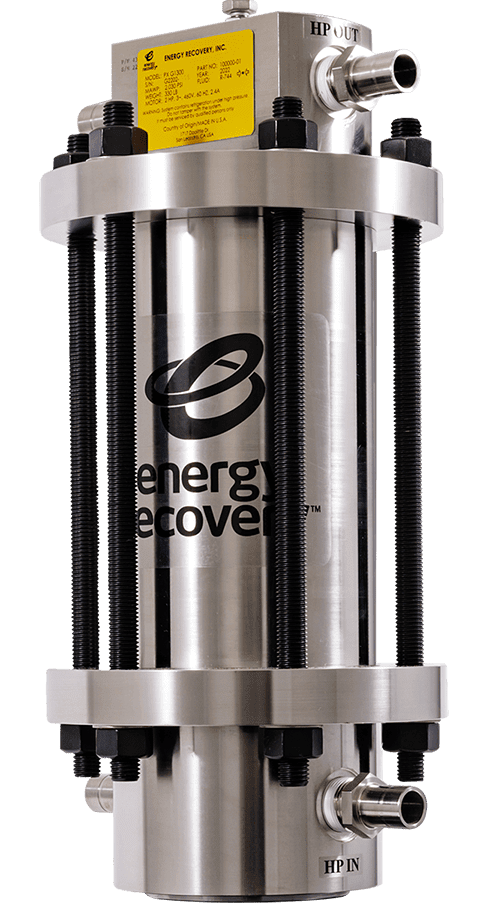
In collaboration with Epta, an independent global player and leader in commercial refrigeration, the supermarket became the first in Europe to incorporate a PX G1300 energy recovery device into its CO2 system.
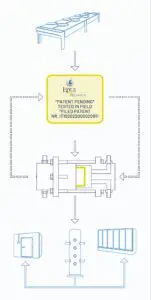
Benefits of the PX G1300
- Energy efficiency improvement of 25% at 35°C (95°F) with up to 30% at 40°C (104°F)
- High temperature rack stability
- Simple design and operation
The installation occurred in a new 1,500 square meter store. This was the first field deployment of Energy Recovery’s PX G1300 technology by Epta, which is now integrated into Epta’s new XTE (Extra Transcritical Efficiency) system, the company’s next generation CO2 refrigeration technology. The PX G1300 was chosen for this green supermarket due to its ability to recycle pressure energy, allowing the system to run more efficiently. This enabled performance improvements at temperatures between 20°C and 40°C (68-104°F), increasing annual efficiency as it allows the system to operate for longer periods. Epta also chose the PX G1300 for its simple design, low maintenance needs, and potential for improving rack stability at high temperature, an increasing challenge the location was facing.
Energy Recovery granted patents:
Patent No.: US 11,421,918
Patent No.: US 11,397,030
Energy Recovery published patents:
Pub No.: US 2023/ 0106860
Pub No.: US 2022/ 0397310
Pub No.: US 2022/ 0397324
*The recorded efficiency improvement compares a PX-enabled CO2 refrigeration system to a CO2 refrigeration system without an energy recovery device at temperatures above 40°C (104°F).
The Result
Supermarket Future-Proofs Refrigeration Operations While Reducing Operating Costs and Emissions
After the PX G1300 was installed, the supermarket saw efficiency improvements of more than 25% at 35-40°C (95-104°F) with projected improvement of up to 30% at 40°C (104°F), compared to a standard CO2 booster system. CO2 refrigeration systems typically lose efficiency as temperatures rise. The PX G1300 solved this issue by providing free compression power, increasing efficiency levels.
By integrating the PX G1300 into the C02 refrigeration system, high temperature rack stability was also achieved, which was important to the store when facing increased extreme weather conditions, including heat waves. Additional capacity provided by the PX G1300-enabled CO2 refrigeration system ensured smooth operation even beyond its original design point. The new Northern Italy store is now prepared for future extreme energy variations, ensuring protection against refrigeration failure and revenue losses.
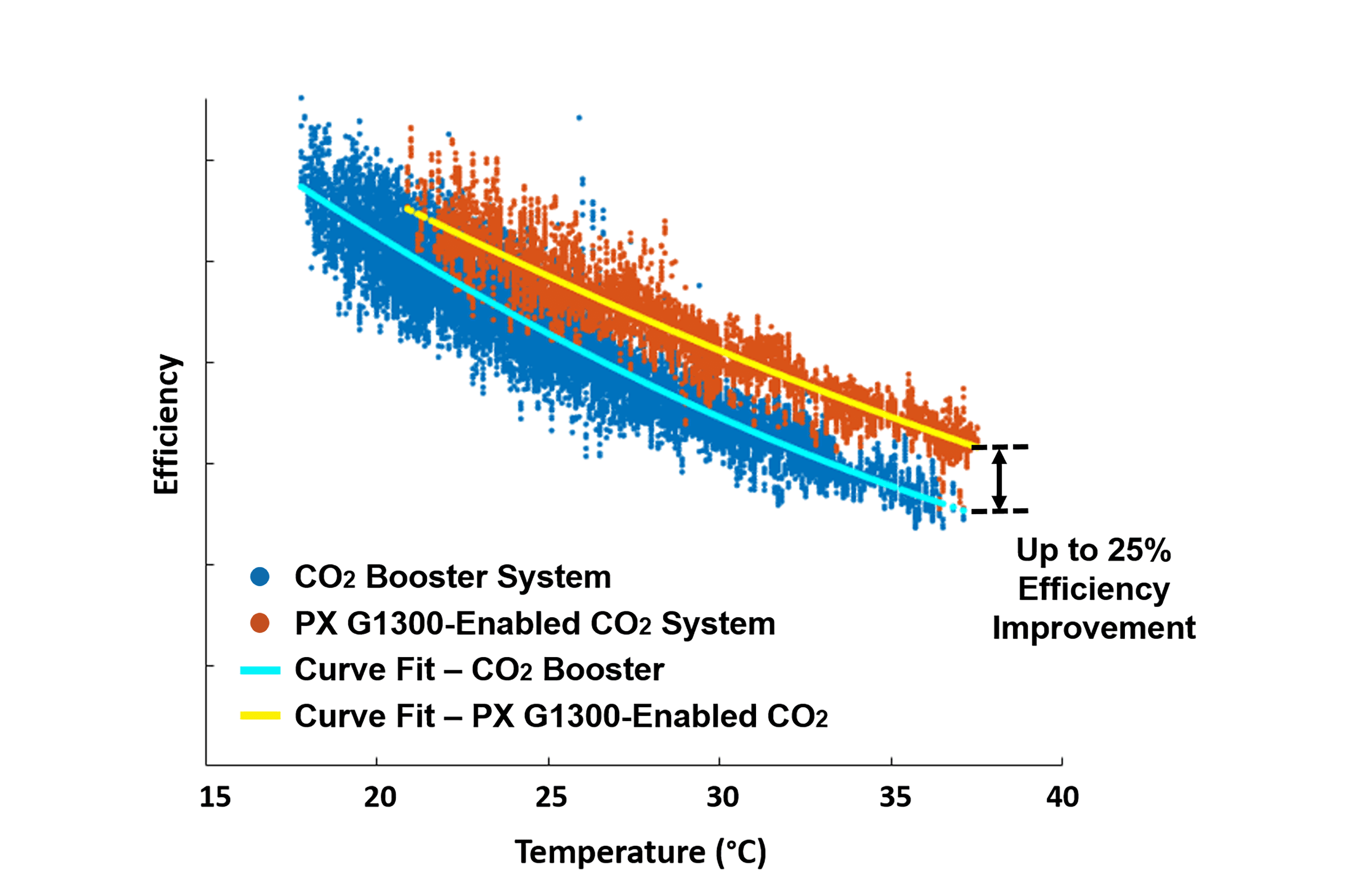
The efficiency improvements of the PX G1300 system are more than 25% at 35-40°C (95-104°F) and projected to be up to 30% above 40°C (104°F) compared to standard CO2 booster systems.
Disclaimer: Actual results may vary based on multiple factors including system architecture, cost of electricity, ambient temperature, square footage and size of facility, variable loading of the system, time of day, and geographic location. Findings based on customer testimonials and Energy Recovery’s laboratory and field results. Energy Recovery accepts no responsibility for possible errors in catalogues, brochures and other product material, and reliance on data is at your own risk. All trademarks in this material are the property of the respective companies.