The Challenge
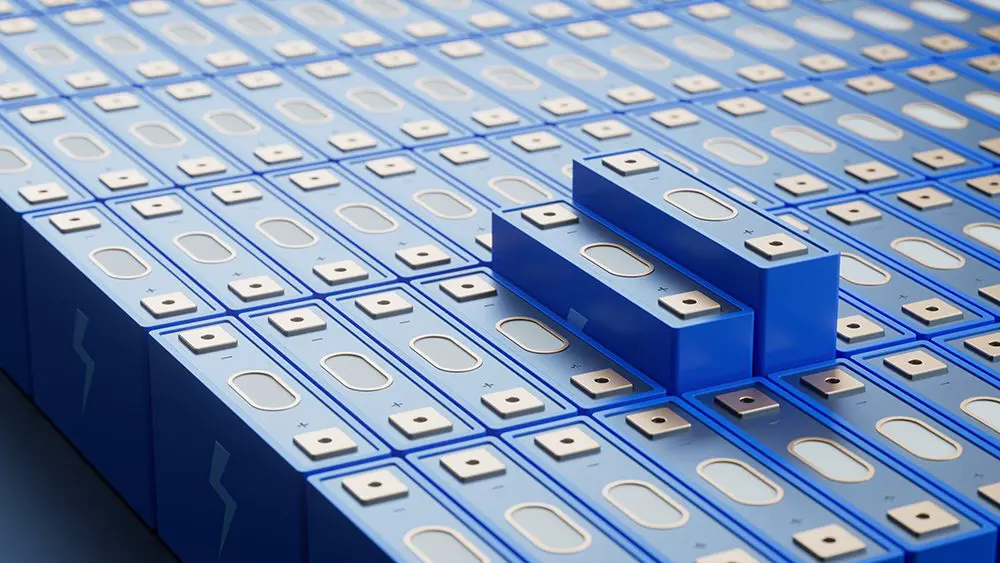
The Lubei Wanrun Intelligent Energy Plant is an LFP cathode manufacturing facility in Binzhou, a city in the Northern part of Shandong Province in Eastern China. The plant produces 240,000 tons of LFP per year for companies like CATL and BYD. The waste stream from this production has approximately 16,000 mg/L and 3,100 m3/hr of ammonium sulfate and periodic slugs of ammonium phosphate depending on internal processing. To ensure zero liquid discharge (ZLD), Wanrun Group, the plant owner and process designer, Shenzhen HuaHongQingYuan Environmental Protection Technology, uses a complex combination of brine concentration technologies which includes reverse osmosis (RO) and ultra high-pressure reverse osmosis (UHPRO). This reduced the process flow by approximately 90% prior to thermal ZLD process. In addition to producing a valuable fertilizer, this ZLD process achieves more than a 95% high quality water reuse rate and also helps the plant operation fully meet wastewater discharge regulatory requirements related to nutrients and sulfate. This process required a great deal of energy and Wanrun was looking for a way to reduce energy consumption in the high-pressure and UHPRO concentration processes.
Location
Shandong, China
Project Name
Lubei Wanrun Intelligent Energy Technology(Shandong) Co., Ltd
Customer
Shenzhen HuaHongQingYuan Environmental Protection Technology Co., Ltd
Facility Capacity
240,000 tons Lithium Iron Phosphate (LFP) per year
Est. Cost Savings
$1,300,000 USD/year
Est. Energy Savings
13,000,000 kWh/year
The Solution
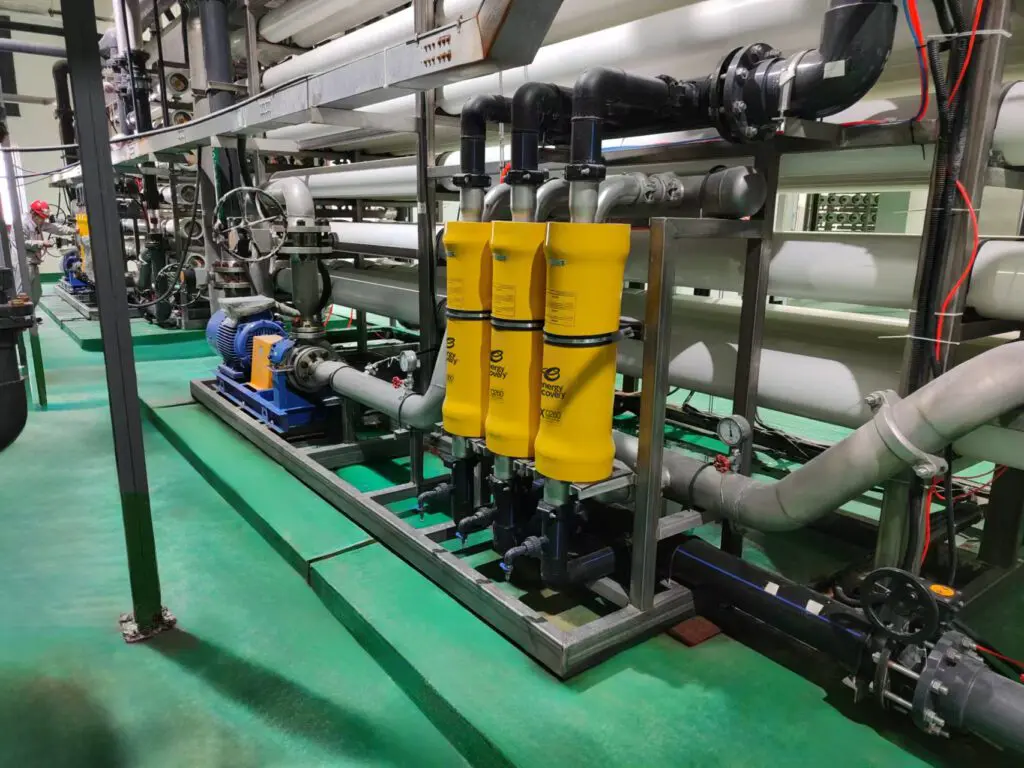
Due to the large waste stream and high total dissolved solids (TDS) level, the single UHPRO train feed stream can be as high as 80 m3/hr and 90 bar, making it difficult to select a proper centrifugal pump to service as a high-pressure pump (HPP). By utilizing Energy Recovery‘s PX U250, a pressure exchanger specially designed for ultra-high pressure environments, the UHPRO HPP required flow could be largely reduced. This allowed for smaller, and more efficient, positive displacement pump (PDP) to be selected. By using UHPRO and the PX U250, the facility largely reduced capital expenditures and operating costs in the thermal system. The treated freshwater is able to be circulated back into the battery production facility, creating a more closed-loop water system, significantly reducing water consumption and the associated costs.

PX U250 combined with PX Q260 successfully increases energy efficiency and reduces plant water consumption
With the increasing demand for treatment of wastewater, high volume UHPRO trains are becoming increasingly popular. Energy Recovery’s single PX U250 treats as much as 56.8 m3/hr brine flow at up to 120 bar, which simplifies and optimizes the UHPRO train to achieve the lowest SEC possible. This not only makes UHPRO more affordable but also reduces the waste stream sent to the thermal process, thus reducing capital and operation costs. This combined with the use of PX Q260s in the high-pressure reverse osmosis flow streams, ensures an optimized plant build for greater efficiency and lower operation costs.
Key Takeaways
- The combination of the PX U250 and PX Q260 significantly increases plant sustainability
- The use of the PX U250 in UHPRO can drastically reduce costly thermal processes
By integrating the PX and Ultra High-Pressure PX into our high-pressure and ultra high-pressure concentration process sections, energy consumption across the entire wastewater treatment system is reduced by 4-5%. This makes the membrane concentration system more affordable and more energy-efficient, and significantly reduces the amount of water sent to the evaporation crystallization system, thereby largely reducing investment and operation expenses. We are very satisfied with the high efficiency and reliability of PX technology. In addition, the support and service from the ERII technical service team is outstanding.
Plant Operations and Maintenance Team
The Result
Commissioned in July 2023, the Lubei Wanrun Intelligent Energy Plant was one of the first to utilize the award winning PX U250. Regular visits were conducted in 2024 to confirm the performance. While the site was in full operation, PX efficiency was measured at >95%. This means the payback for the energy recovery equipment is well below two years, even at reduced feed TDS. As the plant continues to increase TDS concentrations and system pressures, the efficiency of these ERDs is expected to increase, thereby recovering even more energy.