The Challenge
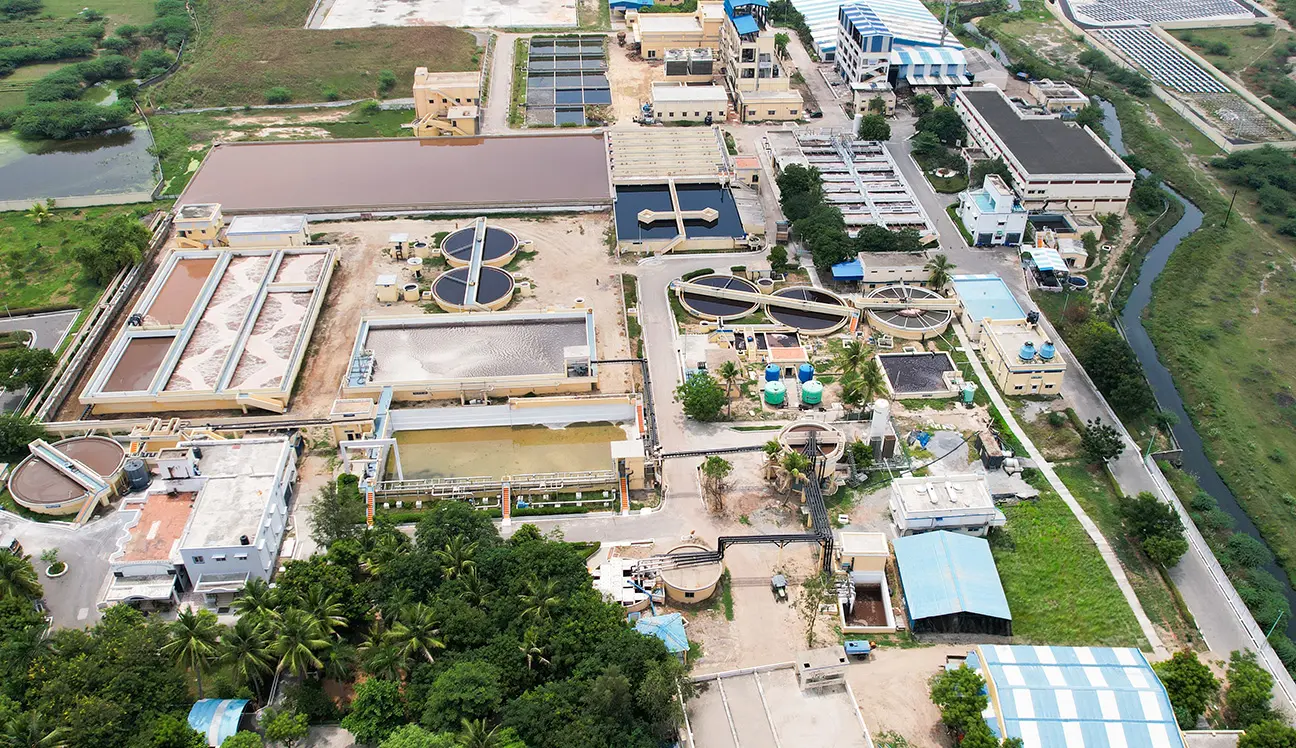
Ranipet is an industrial town in Tamil Nadu, India, where multiple tannery manufacturing plants operate, processing hides into finished leather. To avoid releasing toxic wastewater into the environment and comply with local discharge regulations, the Ranitec Common Effluent Treatment Plant (CETP) was built to direct effluent from 92 tanneries. One of the country’s largest effluent treatment plants for tannery wastewater, the CETP was designed with multistage reverse osmosis (RO) systems to achieve zero liquid discharge (ZLD). This effectively treats the effluent and delivers clean water back to the tanneries for reuse in their tanning process. Because reverse osmosis is highly energy-intensive, the plant needed a solution to reduce the energy consumption of implementing ZLD.
Location
Ranipet, India
Estimated annual energy savings
1,058,500 kWh
Project name
Ranitec CETP
Customer
Ranipet Tannery Effluent Treatment Co. Ltd.
Intake capacity of facility
4500 m3/day
Annual emissions avoided
-500 metric tons
Annual operational cost savings
$70,361 USD
The Solution

Ranitec CETP was able to save energy and costs needed for reverse osmosis systems by partnering with Energy Recovery. The plant chose to incorporate a full suite of product solutions, including the turbocharger, PX® Pressure Exchanger® energy recovery device (ERD), Aquabold™ high-pressure pump, and circulation pumps. Five skids have been equipped with the turbocharger, and one skid with two PX 70s, which work by harnessing the pressure energy of the high-pressure reject brine and transferring it to the incoming feed flow, thereby reducing the flow through the high-pressure pump. This approach has reduced the stream volume sent to the thermal system and eliminated the need for an evaporation pond.
The energy recovery devices were especially critical to address the variability and rise in total dissolved solids and temperature. With salinity fluctuating from 15,000 to 20,000 ppm, the varying feed chemistry of the tannery waste stream can pose a challenge to membrane systems and pumping equipment. During the initial commissioning, the Energy Recovery service team provided expertise on the ideal configuration and requirements of the RO system to prevent any stalling and the plant has been in successful operation ever since. Energy Recovery’s solutions for this multistage RO CETP system are helping to enhance membrane operation, resulting in higher recovery rates with a more concentrated effluent and a smaller thermal evaporation process. Because of this, Ranitec was able to realize 60% CAPEX and 30% OPEX savings.
Combined Energy Recovery Solutions for Variable Waste Streams
- The Aquabold high-pressure pump is a multistage centrifugal pump that can pair seamlessly with either the turbocharger or PX to drive feed flow at a rate of up to 280 m3/h.
- Turbochargers enhanced the plant’s productivity and improved efficiency, capable of operating at pressures of up to 45 bar.
- The PX 70 was incorporated in one skid alongside disc membranes to optimize energy consumption and provide flexibility to handle variable feed chemistry.
We are delighted with the performance of Energy Recovery’s turbocharger, Aquabold high-pressure pump, and the PX. By integrating these products into our wastewater treatment process, we successfully reduced our energy consumption by a significant margin. Due to the reduced energy consumption and lower operating expenses, these facilities saved an estimated amount of $70,361 USD annually.
Managing Director of Ranipet Tannery Effluent Treatment Company
The Result
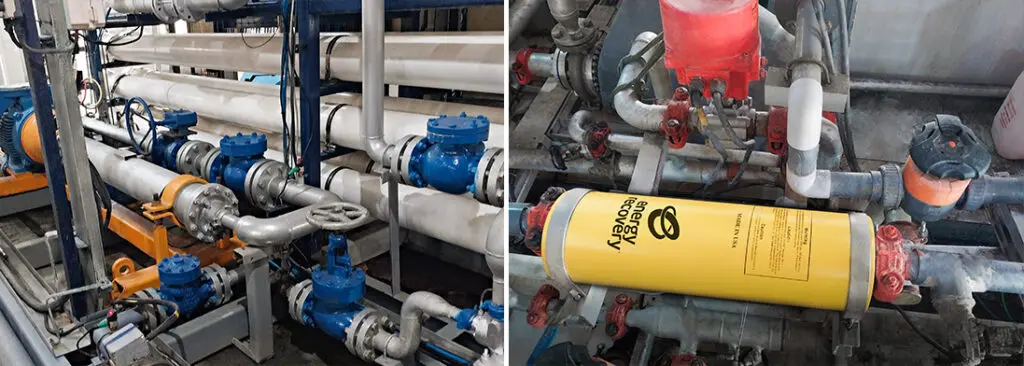
Using Energy Recovery’s solutions allowed Ranitec to lower the energy consumption of multistage RO and helped to achieve ZLD, which cut the investment in a thermal system and reduced operational costs. The CETP achieved a payback period of under two years, with savings projected to increase as the TDS concentration rises. Currently, the TDS can rise up from 15,000 to 20,000 ppm with little to no effect on the equipment.
Engineers at Energy Recovery have supported the plant since its commissioning in 2011, with a full suite of products helping save 2,900 kWh daily. Due to the reduction in energy consumption lowering operating expenses, the facility saved an estimated $70,361 USD annually. The plant has been operating successfully and hassle-free for the last 11 years, with a capacity of 4,500 m3 /day. It is India’s first CETP to achieve the International Standard for Quality (ISO). The treated freshwater has been recycled back to 92 member tanneries and the efforts prevented further pollution of Ranipet by eliminating discharge of effluent.