The Challenge
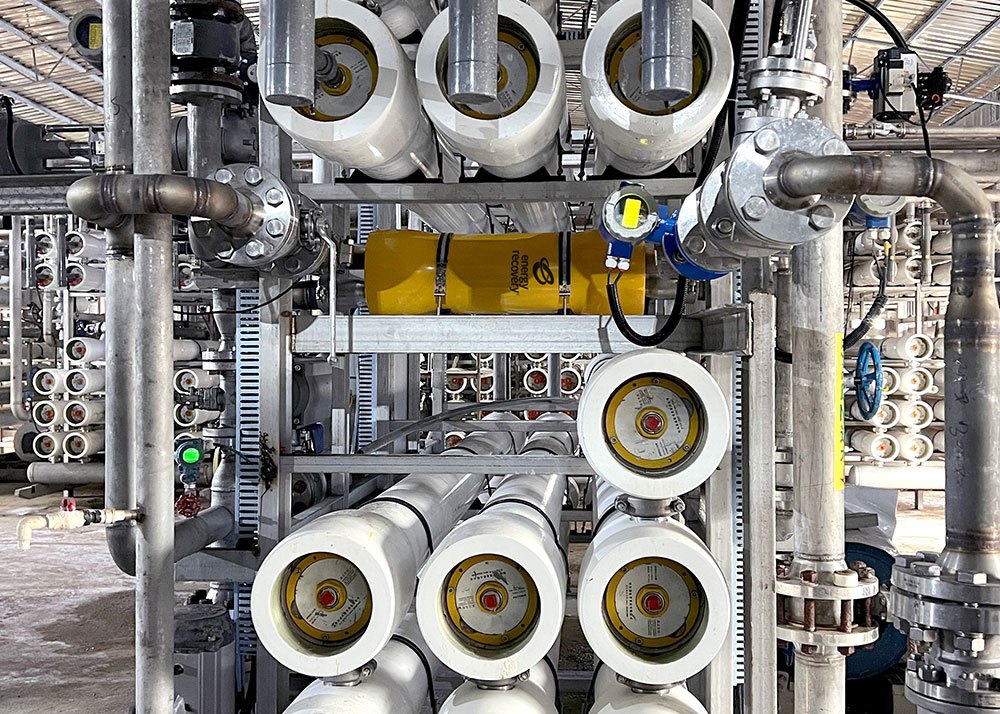
At the center of Guangdong’s bustling textile manufacturing corridor, the Jialida Textile CETP plays a critical role in enabling regional economic growth while meeting increasingly strict wastewater discharge mandates. The facility treats effluent from a collective of textile producers using membrane-based processes and recovers fresh water, sodium chlorine, and sodium sulfate for resale.
Membrane technologies such as nanofiltration (NF) and reverse osmosis (RO) systems used at the plant are efficient in concentrating wastewaters, but they require high levels of electricity at high salinities such as in ZLD applications. To achieve both environmental and economic sustainability, Jialida required a high-efficiency, high-reliability energy recovery solution that could be integrated into its existing infrastructure.
Jialida faced rising energy costs and increasing environmental pressures as Guangdong’s textile industry came under stricter regulatory oversight. The plant needed to meet more demanding effluent treatment and ZLD requirements while managing sharply increasing energy consumption from high-pressure membrane systems. Traditional high-pressure pumps could no longer keep operating costs under control as system loads grew, making it essential to find a better solution. Recovering wasted pressure energy from the NF and RO brine streams proved to be the most effective way to reduce overall energy use without sacrificing treatment performance.
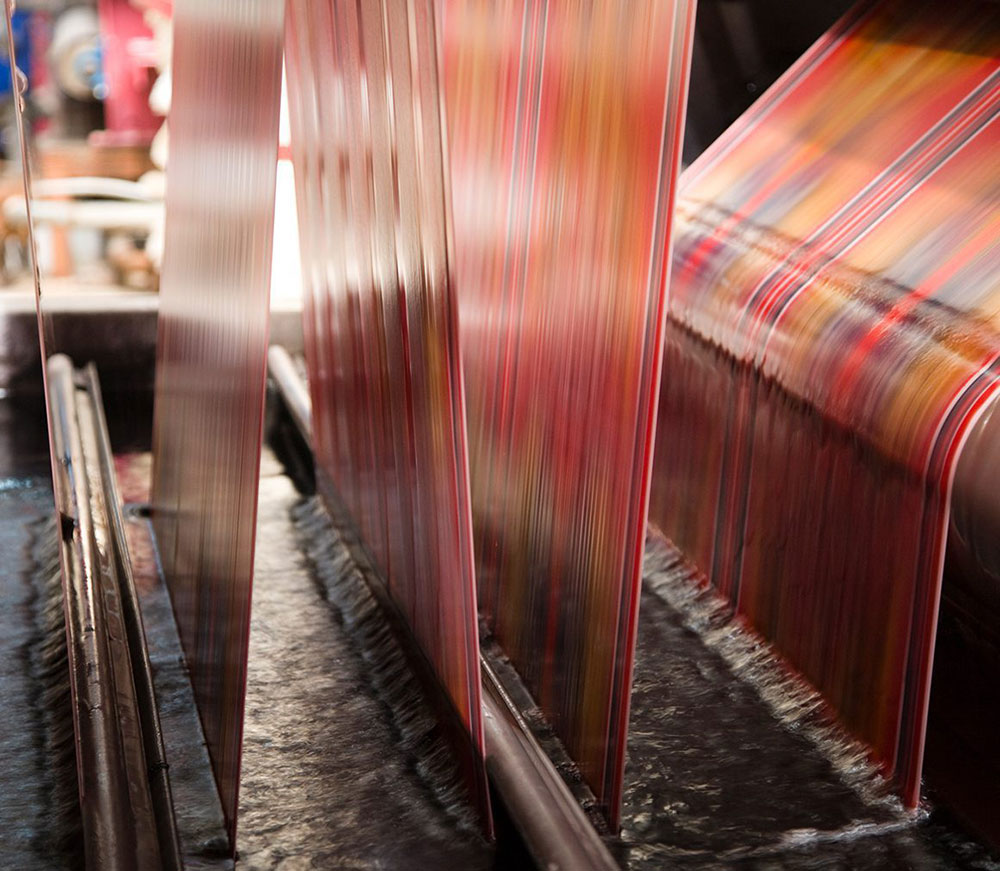
Location
Foshan Textile Industry Zone, Guangdong Province, China
Project
Jialida Textile CETP (Textile Industrial Zone Wastewater Treatment & Reuse)
PX Model
PX Q140
SEC
Reduced from 4.3 to 2.2 kWh/m³
Energy Savings
~50% reduction in SEC on retrofitted NF train
Annual Cost Savings
~US$68,700 per year (at US$0.07/kWh)
The Solution
PX® Pressure Exchanger®: High-Efficiency Energy Recovery Device for Nanofiltration Trains
To optimize energy consumption of the NF system, Jialida selected the Energy Recovery PX Q140, a solution proven to improve efficiency and operational reliability.
Key elements of the retrofit included:
- Integration into existing high-pressure infrastructure, minimizing disruption and capital expenditure.
- Combining two NF trains into one larger train, enabling optimal energy recovery performance.
- A flexible operating configuration, allowing operators to switch seamlessly between PX mode and conventional mode as needed.
This design approach aligned with Jialida’s long-term strategy to reduce lifecycle OPEX, lower its carbon footprint, and modernize its treatment processes for future regulatory shifts
As the owner of China’s largest textile effluent zero liquid discharge project, we collaborate with renowned UF, NF and RO brands around the world. We are very pleased to have adopted Energy Recovery’s PX technology to retrofit two NF trains in the 1st phase.
Nearly nine months of continuous operation has demonstrated the PX’s performance with 100% uptime and nearly 50% energy savings. Furthermore, Energy Recovery’s technical support has been excellent to work with.
Mr. Kong, Plant Operations and Maintenance Manager
The Result
Energy Use Cut in Half and a Pathway for Full-Site Optimization
The initial PX Q140 installation delivered immediate, measurable impact:
- Energy consumption reduced from 4.3 kWh/m3 to 2.2 kWh/m3 on the retrofitted NF/RO train
- ~50% reduction in specified energy use, meeting the plant’s target for efficiency improvement
- Annual cost savings of ~US$68,700, based on electricity cost of US$0.07/kWh
- A scalable retrofit model for additional trains across the facility, enabling expanded carbon-emissions reduction and cost optimization
These results underscore how energy recovery technology can transform OPEX performance in industrial ZLD applications while supporting economic competitiveness in high-demand manufacturing corridors.
Why It Matters
Jialida’s modernization demonstrates how membrane-based industrial water reuse can be both environmentally compliant and economically viable when supported by advanced energy recovery systems. By pairing high-pressure treatment with the PX Q140, the plant has carved out a blueprint for scalable, low-carbon textile wastewater treatment, supporting regional industry while reducing environmental impact.